





.png)








AI for accountancy firms: a practical guide for the compilation practice
Where does an accountancy firm start with AI? In the compilation practice. This guide shows what is already possible today and how to start responsibly.

Thursday afternoon at the office. Tomorrow you are discussing the draft annual accounts of an installation company and the file has to be finished today. So you open the trial balance, go through the suspense accounts, lay the VAT categories next to the general ledger and jot down questions for the client along the way: what is that balance on the suspense items doing there, and why are the car costs so much higher than last year? You can only assess once the research is done. And it is exactly that research that eats up the afternoon.
That is precisely where AI for accountants becomes practical. Not a chatbot with generic answers, but an AI assistant connected directly to the client administration that answers your review questions with the entries included. In this guide you will read why the compilation practice is the logical starting point, which tasks already lend themselves to it today and how your firm can start with it responsibly.
Why the compilation practice is the logical starting point
In a compilation engagement under NBA Standard 4410, you compile the annual accounts or other financial information based on data the entrepreneur supplies. You apply your administrative and reporting expertise to this, but you do not perform an audit and give no assurance: there is no auditor's report with certainty.
That character makes the compilation practice ideally suited to learning how to use AI on client data. The work consists to a large extent of reconciling, investigating and querying: do the VAT categories match the general ledger, what is on the suspense accounts, which items deviate and which questions do you put to the client. That is research and comparison work, and a connected AI assistant is strong at that. Assessing what comes out of it remains your profession.
The threshold is also lower here than in the assurance practice. You experiment with work you already do on client data anyway, within the access your firm already has.
Deploy AI where the research work sits
Answer client questions while the client is on the line
A client calls: how much is still outstanding with their debtors, what was the revenue so far, is there room for that investment? Normally you note down the question, look it up and email the answer. With a connected assistant you ask the question in plain English and get an immediate answer, with the underlying figures included. The AI answers based on the real entries in the administration. For relationship management that is a quiet gain: you sound better informed because you are.
Have the file prepared: reconciliations and outliers
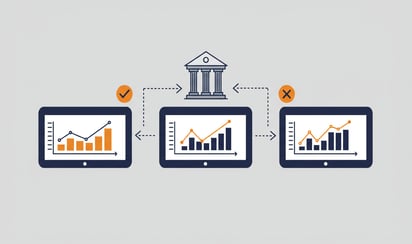
Preparing a compilation file is a fixed series of checks. Do the VAT categories reconcile with the general ledger? Which suspense accounts still have a balance? How old are the outstanding debtors and creditors? Which general ledger accounts deviate notably from last year this year? That series can be worked through nicely as a conversation. You ask, the assistant supplies the deviations, and you determine what is a booking error, what becomes a question to the client and what is simply correct.
Run fixed quality checks over the administration
The same approach works outside the annual accounts too: a fixed set of control questions per client, for example each quarter. Are there entries on the suspense account? Are there sales entries without a VAT code? This way you clear noise out of the records before the annual work starts, and you spread the investigative work across the year. To be honest though: this is a guided workflow per set of records. You select a client, run the checks and move on to the next one. It is not one press of a button across fifty client records at once.
One firm, three accounting packages
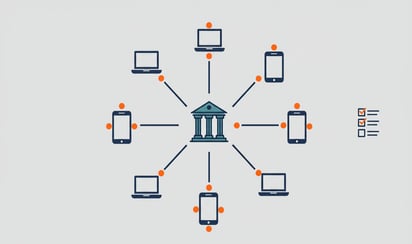
A firm rarely chooses the accounting package itself; the client brings it along. One client works in Exact Online, another in Twinfield and a third runs AFAS Profit. That is why the AI connector from iWebDevelopment exists for all three: Exact AI Connect for Exact Online, the Twinfield AI connector and the AFAS AI connector. The way of working is the same everywhere: connect, select the records, ask questions in plain English. Your staff learn one method, regardless of the client's package.
Authorisation still applies per set of records and per user. The AI sees only what the connected employee is allowed to see, nothing more.
Keep the roles clear
An AI assistant on client data is a tool, not a colleague with signing authority. The assistant flags anomalies and makes suggestions; you decide whether something is genuinely wrong. Write actions, such as a correcting entry, are never carried out by the AI without being asked: there is always an explicit confirmation step first. On top of that, the firm can limit write rights per role or set the connector to read-only entirely, with a daily limit as an extra brake. For an accountancy firm that is not a side issue but the core: the tool has to fit into your quality system, not the other way around.
That quality system is already on the agenda for 2026 anyway. The Further Regulations on Quality Management (NVKM) replace the old NVKS and follow the international ISQM approach: setting quality objectives, identifying and assessing quality risks, putting control measures in place and monitoring the system. Firms without a statutory audit licence, including the typical compilation practice, may continue working under the NVKS through transitional law until 1 January 2027 at the latest; 2026 is therefore the implementation year, and the NBA published a step-by-step plan for small firms in early 2026. If you are reworking your quality system this year, set down at once how the firm uses AI: who works with it, which rights apply and how you handle the results.
Start small and scale up only after the evaluation
A firm-wide rollout on day one is not needed anywhere. Choose one or two client records, set the connector to read-only and let one experienced employee use it for file preparation. After a few weeks you evaluate: which control questions really produced something, where manual work was still needed, and what does the employee think of it? If it works, you scale up to more records and more colleagues, and possibly to write actions with confirmation.
The trial period is set up for exactly that: 30 days free with all features, up to 3 administrations during the trial, and monthly cancellable afterwards. And for the supplier assessment in your file: the connector is ISO 27001 certified and independently pentested with public results; financial data is only stored with the Analytics subscription, in a secure analysis environment within the EU that we delete as soon as you stop.
Frequently asked questions
Can AI compile a set of annual accounts?
No. The AI does the reconciliation and signalling work: comparing categories, surfacing discrepancies, drawing up overviews. The compilation itself, including the professional judgement that Standard 4410 requires, remains the work and the responsibility of the accountant.
Is an accountancy firm allowed to use AI on client data?
You arrange that within your own quality system and your agreements with the client. In any case, choose a solution with demonstrable security: ISO 27001, an independent pentest and a clear answer to the question of what is and is not stored. Record who uses the connector and with what rights, so the use fits the control measures you already describe under the NVKM.
Does the AI see all client administrations at once?
No. You work per administration: select, ask questions, and for the next client you repeat the check. Authorisation applies per administration and per user, so the AI only sees what the connected employee is allowed to see.
Does AI replace the assistant accountant?
No, it shifts the work. Looking up and comparing becomes faster; assessing, client contact and forming judgements remain human work. You notice the difference mainly because a file is ready sooner for the real compilation thinking.
Sample prompts for compilation practice
Copy these questions into your connected AI assistant and adapt them to the client in front of you. The trial balance question applies to a Twinfield administration.
Are there any entries on the suspense account in this administration?
Show the trial balance for period 6.
Which general ledger accounts deviate this year by more than 25 percent from last year?
List the reconciliation checks for the file: VAT categories, intermediate accounts, debtor/creditor ageing.
Want to try it yourself? Start for free with Exact AI Connect →
Frequently asked questions
En dit is het antwoord.