A colleague who eagerly requests her sales figures through Claude. An entrepreneur who generates a quarterly report within two minutes. AI in accounting saves hours per week, that much is clear by now. But there is a side that gets less attention: how do you use AI in a way that is not only fast, but also responsible?
Financial data is sensitive. Customer names, invoice amounts, bank details, supplier agreements, these are details you do not simply entrust to random software. And you do not have to. Responsible AI use is not a matter of blind trust. It is a way of working.
Responsible use starts with you
The technical security of an AI connector can be watertight. ISO 27001 certified, independently pentested, encrypted connections, that is the foundation. But technology alone is not enough. The way you use the connector makes the difference between a reliable assistant and a source of errors.
Compare it with online banking. Your bank has the best security in the world. But if you stick your PIN on a Post-it or approve transfers without thinking, that security does not help you.
The same applies to AI in your accounting. The connector protects your data. You protect your work process.
Check what the AI returns
AI is not an oracle. It is a tool that formulates answers based on the data it retrieves. Sometimes that answer is exactly right. Sometimes context is missing. A sales overview without a filter on period gives a different picture than the overview of just this quarter.
The rule of thumb: treat AI output the way you treat a report from a junior employee. Read it. Check the figures. Ask a follow-up question if something is off. "Are these all the invoices, or only the paid ones?" That kind of question.
The AI connector helps you with this. With every write action, creating an invoice, changing a customer record, the connector first shows a preview. Only after your confirmation is the action carried out. For amounts above 10,000 euros and for delete actions you get extra warnings. Not as an option, but by default.
Manage who has access
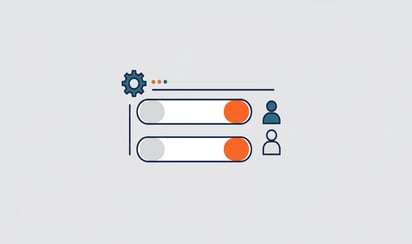
Not everyone in your organisation needs the same access. The AI connector respects the rights you have set in Exact Online. Does an employee only have read rights on invoices? Then the AI can, for that employee, only view invoices, not create or change them.
You select yourself which administrations the connector may access. Start with one administration to try it out. Add more later once you have built up confidence. Every user logs in separately, every action is logged. No shared accounts, no confusion about who did what.
Understand how the data flows
The biggest concern we hear: "Does my accounting data end up in the AI?" The short answer: your data is never used to train AI models. Every question is answered individually with your own figures, from your own administration, through the official Exact Online API. For more complex analyses the AI works with a private analytics environment in the EU that has been set up for you, shielded per administration.
Your figures remain yours. The AI reads along through your own OAuth permission, and for deeper analyses it works with a private environment in the EU that is shielded per administration. We only use that data to answer your questions: not for AI training, not for other customers, not for resale. What you always keep: full control via OAuth, ISO 27001 infrastructure, and the ability to disconnect any administration directly.
The connector works via MCP (Model Context Protocol), the open standard that connects AI assistants with software. That standard explicitly requires that data may not be forwarded without permission. It is not just our policy, it is built into the architecture.
A series in four parts
This article is the starting point of a series about responsible AI use in accounting. In the coming articles we go deeper into practice:
Every step brings you closer to a way of working in which AI saves you time without you making concessions on security or accuracy.
Want to try it yourself? Start for free with Exact AI Connect →







.png)