





.png)







Cross-border VAT: what ViDA changes for webshops
The EU has rewritten the VAT rules. Not a single adjustment, but a complete package that affects every webshop selling across borders.
The EU has rewritten the VAT rules. Not a single adjustment here and there, but a complete package that comes into force step by step over the coming years. It is called ViDA, VAT in the Digital Age, and it affects every webshop that sells across the border. Whether through its own webshop, through a marketplace, or both.
Three pillars, dozens of deadlines, and a lot of uncertainty. This article brings it back to what you as a webshop entrepreneur really need to know.
ViDA in three sentences
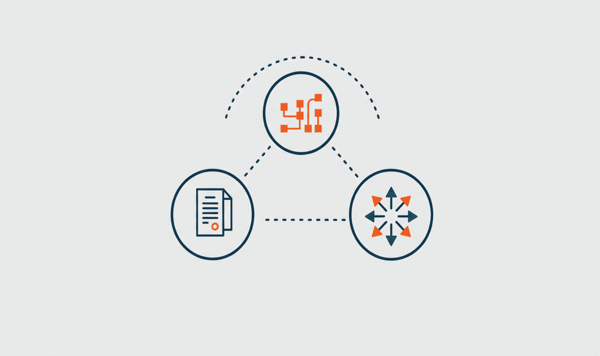
ViDA consists of three pillars that together modernise European VAT. One: all B2B invoices become mandatory digital, in a machine-readable format. Two: platforms such as Bol.com and Amazon become liable for VAT themselves in certain cases. Three: soon you will be able to sell across all of Europe with a single VAT registration.
Sounds clear. The details are less so.
Pillar 1, every B2B invoice becomes digital
From 1 July 2030, every cross-border B2B invoice within the EU must be sent as an e-invoice. No PDF, no scan, no attachment in an email. A structured file in EN16931 format, which is the European standard, in practice a UBL or CII file, sent through a recognised network such as Peppol.
The Netherlands is likely to go further than the EU requires. The Ministry of Finance had an advisory report prepared by EY, published in January 2026. The recommendation: make domestic B2B invoices mandatory digital too, starting as early as 1 January 2030. That is half a year earlier than the EU deadline for cross-border.
Belgium is already there. Since 1 January 2026, e-invoicing has been mandatory for all domestic B2B transactions. Belgian customers now already expect a UBL invoice via Peppol. Still sending a PDF? Then it has to be retyped manually. No customer is happy about that.
Italy showed earlier what the impact can be: after the introduction of mandatory e-invoicing, the VAT gap dropped by 25%. That is precisely why the EU is pushing this through. And why the Netherlands probably will not lag far behind.
The saving for businesses is real too, by the way. The EY report calculates a 55 to 70 percent cost saving per invoice. Concretely: five to six euros per invoice sent, eight euros per invoice received. That adds up.
Pillar 2, platforms become liable for tax
The second pillar focuses on the platform economy. Platforms that facilitate short-term rental (less than 30 nights, think of Airbnb) or passenger transport become what is known as a deemed supplier. They become liable for VAT themselves on the transactions that run through their platform.
For webshops the direct impact is limited, unless you sell through a marketplace that falls under this arrangement. Then something does change: the platform pays the VAT, not you. That sounds like less work, but your bookkeeping still has to record the difference correctly. An order through your own webshop is booked differently than an order through a platform that pays the VAT itself.
The arrangement becomes voluntary from July 2028 and mandatory from January 2030. Platforms are already preparing now. As a webshop seller it is wise to understand what changes, so that you are not caught off guard if your marketplace partner suddenly applies different VAT specifications on settlement documents.
Pillar 3, one VAT registration for all of Europe
This is perhaps the most welcome change for webshops that sell internationally. The third pillar expands the One Stop Shop system (OSS) considerably, with the end goal: one VAT registration for all your EU sales.
What changes concretely?
January 2027: OSS is expanded to supplies of electricity, gas and heat. That does not affect webshops directly, but it is the start of the expansion.
July 2027: The call-off stock arrangement is abolished. Do you use it now for stock transfers to other EU countries? Then you have to switch to another mechanism, probably OSS.
July 2028: The big step. OSS will also apply to supplies of goods with installation and your own stock transfers within the EU. That means that for almost all EU transactions you can make do with your Dutch VAT registration plus OSS.
Meanwhile a threshold of 10,000 euros already applies to cross-border B2C sales. As soon as you go above it, you have to register for OSS and pay VAT in the customer's country. Many webshops are already above it without realising, a few hundred orders to Belgium or Germany and you are there.
For the IOSS arrangement (import of goods from outside the EU with a value under 150 euros) an extra requirement is added from April 2025: a Unique Consignment Number per shipment, so that customs can match shipments to declarations.
The timeline: what becomes mandatory and when
| When | What |
|---|---|
| April 2025 | IOSS: Unique Consignment Number per shipment |
| January 2027 | OSS expansion (electricity, gas, heat) |
| July 2027 | End of call-off stock arrangement |
| Voluntary July 2028 | Platforms may already be deemed supplier |
| July 2028 | OSS expansion to stock transfers and installation supplies |
| January 2030 | NL domestic e-invoicing (expected, ViDA-B recommendation) |
| January 2030 | Platforms mandatory deemed supplier |
| July 2030 | EU-wide mandatory e-invoicing cross-border B2B |
| 2032 | Digital reporting domestic (real-time VAT data to the Tax Authority) |
It is not a single deadline. It is a series. And the first one is already on the doorstep.
What this means if you sell internationally through your webshop
Three things come together. Your invoices have to become machine-readable. Your VAT codes have to be correct per country. And you have to know whether an order runs through your webshop or through a platform, because that determines who pays the VAT.
That is not something you arrange in an afternoon. It touches your invoicing software, your bookkeeping, your webshop platform and the connector between them. The webshops that have already automated their administration are in a better position. Not because automation solves ViDA, but because structured data is the basis for everything ViDA asks.
Anyone still assigning VAT codes manually, sending invoices as PDF and keeping OSS declarations in Excel has a serious project ahead over the coming years.
The question is not whether ViDA affects you. The question is whether you are ready when the time comes.